Waldorf, Maryland
Code Compliance Inspections for Finished Basements in Waldorf, MD
Code Compliance Inspections for Finished Basements in Waldorf, Maryland, laid out to IRC R310, permitted, and drained properly before the well is backfilled.
Waldorf, Maryland
Code Compliance Inspections for Finished Basements in Waldorf, Maryland, laid out to IRC R310, permitted, and drained properly before the well is backfilled.
Nobody schedules an egress inspection because they are curious. They call because a listing agent asked whether the basement bedroom is legal, an appraiser declined to count the room, or a buyer's inspector wrote "no egress" in a report sitting between a family and a closing date. A code compliance inspection exists for that moment: a measured, written answer on what passes, what fails, and what each fix involves.
We are Waldorf Egress Window Company, licensed and bonded under MHIC license 155221, and veteran friendly. Our inspection walks your basement against IRC R310 the way a county inspector would, tape in hand, and ends with a punch list you can act on, hand to an agent, or price corrections from.
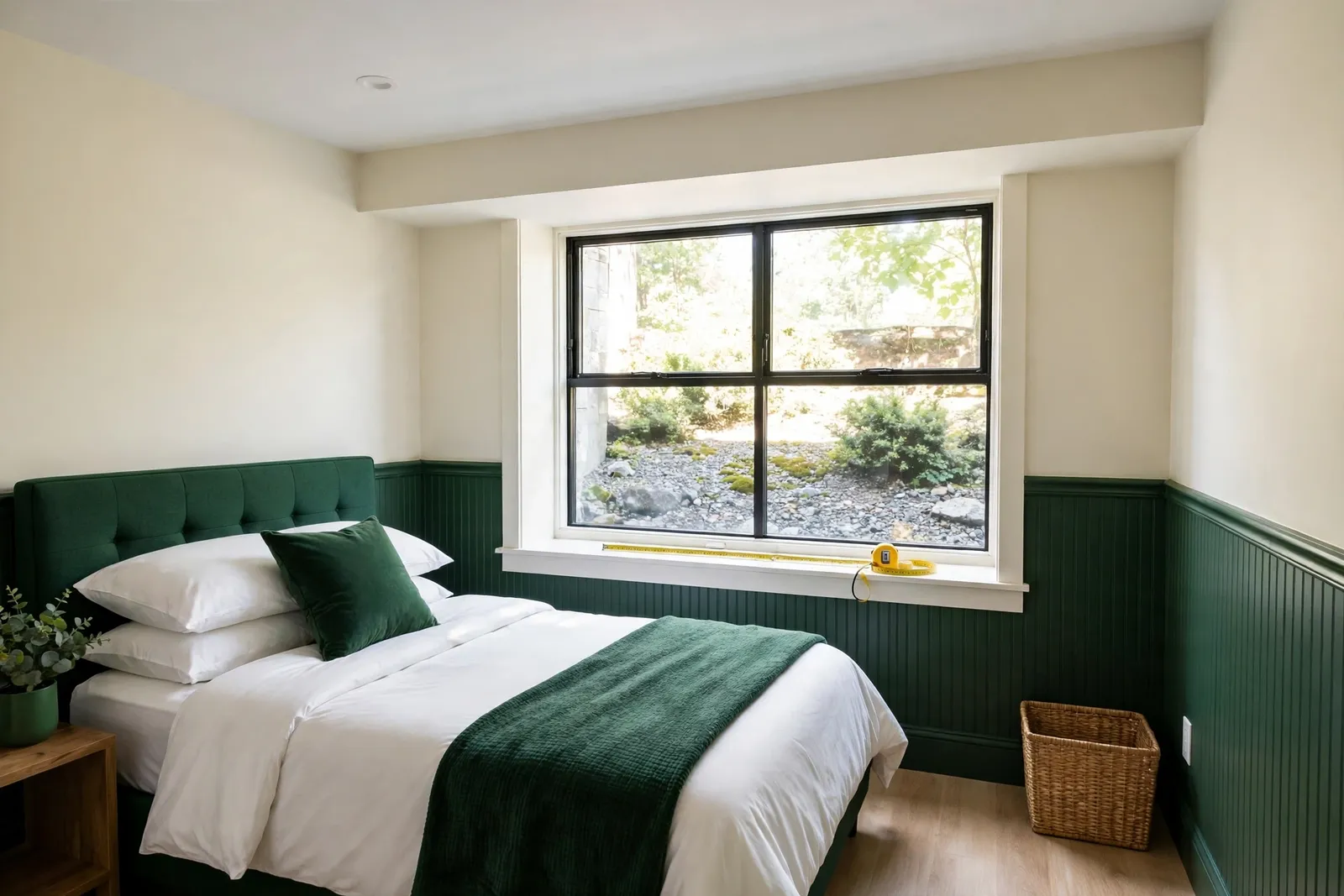
The checklist is short and unforgiving. Every sleeping room opening gets measured for net clear opening, computed from actual clear height and width with the window fully open, not from the size on a label. The sill is measured from the finished floor, because a sill slightly over the limit fails a room that looks fine.
Wells get the same treatment. We measure the well's area and projection, check whether depth crosses the line where a permanently affixed ladder is mandatory, and confirm the ladder is present and clear of the sash swing. Covers are tested from inside: a compliant one releases with no tools and no special knowledge; a handsome cover needing a screwdriver is a failure in a nice finish.
We also note what numbers cannot say. A well with no drain connection goes on the list even when its dimensions pass, because it will not stay a dry, usable escape space. Grade changes raising soil against a sill, and windows painted shut, are recorded too. The punch list pairs every failure with the correction it needs.
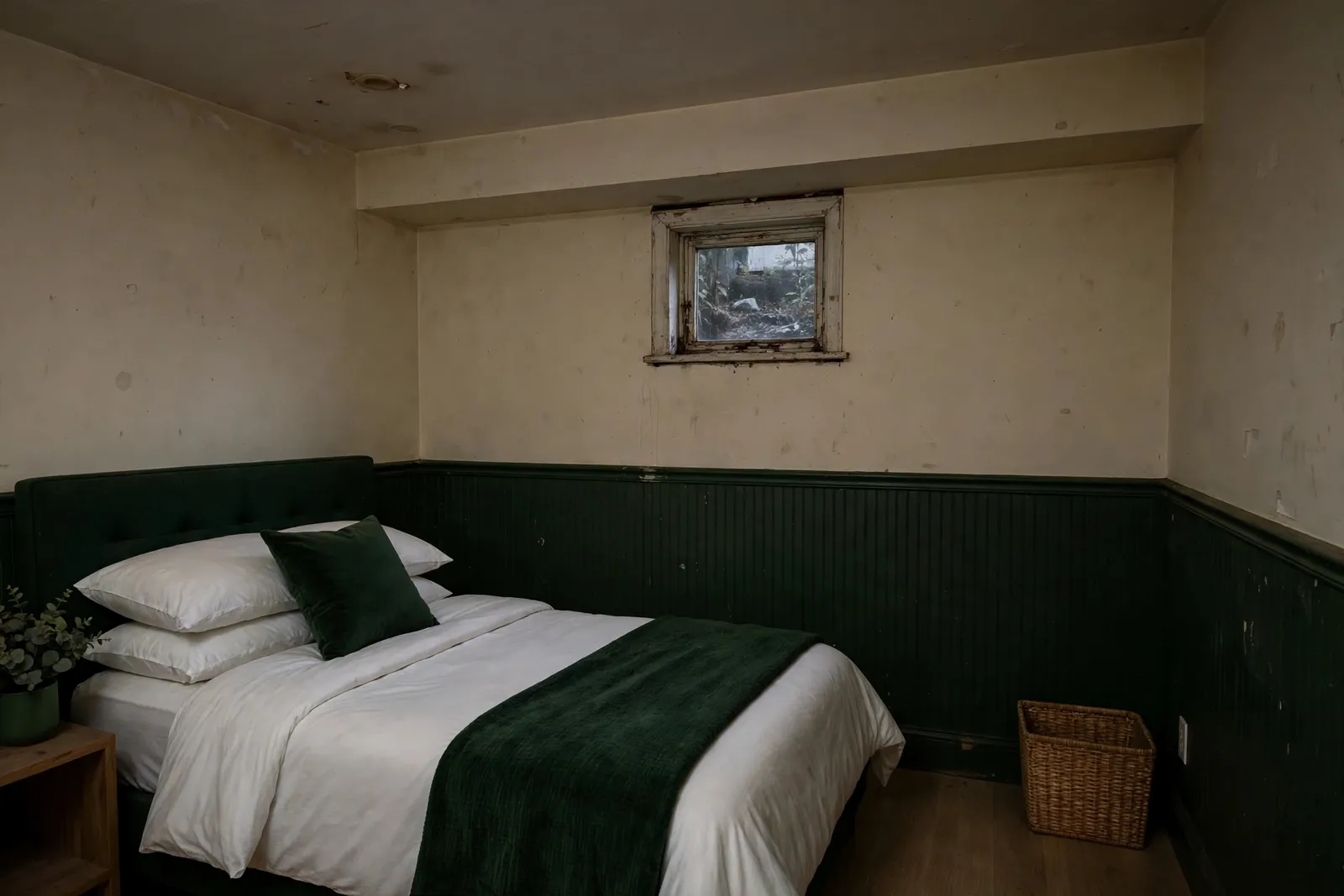
A St. Charles seller preparing to list asked us to check a basement bedroom used for years. Our inspection found the opening short on clear width and a deep well with no ladder. We enlarged the opening, set a lintel, installed an egress rated casement, and fitted the ladder; the room passed final county inspection with listing photos scheduled the same week.
The check itself is part of our estimate visit, so the honest way to talk cost is to price what it leads to: the corrections. A failed opening that needs to grow is enlargement work at $2,800 to $4,800. An opening passing with the wrong window in it takes a replacement at $1,200 to $2,800. A room with no workable opening needs a complete installation at $3,500 to $6,500, and well work runs $700 to $2,500. Permit fees on correction projects typically run $150 to $500, included in our submittal and inspection handling.
Sales lead the list. An uncountable basement bedroom is worth measurably less, and the discovery tends to surface mid-transaction, when the seller has the least room to maneuver. Refinances and appraisals produce it on a slower fuse, county complaints on the worst terms of all.
The better moment is before any of those: finishing a basement, buying a home, or converting a den into a spare bedroom. Then the check is a planning tool, not an emergency measure, and corrections run on your calendar instead of a closing calendar. The list is the same list; only the pressure changes.
Every sleeping room opening against the full R310 list: net clear opening from the open window, clear height and width, sill height from the finished floor. Then the well: area, projection, ladder presence where depth requires one, cover release from inside. Everything lands in a written punch list.
You get the specific reason in writing, because most failures are narrow. An opening inches short on width is an enlargement; a correct opening with the wrong unit, a replacement; a missing ladder, a small fix inside well work. Hard cases exist, usually a room with no usable exterior wall, and we say so rather than sell a window that cannot legalize it.
Enlarging a short opening runs $2,800 to $4,800, replacing a unit in a sound opening $1,200 to $2,800, a full new installation $3,500 to $6,500, and well corrections $700 to $2,500. Permit fees of $150 to $500 typically apply to work that cuts or enlarges the foundation.
No standalone ticket. The check is built into our estimate visit, and the punch list comes out of that visit. You pay for correction work only if you choose it, priced from the published ranges, and the list is yours to use with an agent or appraiser either way.
Most single window corrections run two to three working days on site once the permit clears, and signed agreement to final inspection usually stays inside about three weeks. We sequence permit and inspection bookings around real estate deadlines, and the final sign off is the document your transaction needs.
Yes, and it is one of the best uses of it. Sellers describe lower levels generously; a finished room with a bed in it is not automatically a legal bedroom. A punch list before closing tells you what the basement truly is and what it would cost to make it match the listing, with facts to negotiate from.
Tell us about your basement and the room you want to make legal. We read every request that comes in and respond with the next steps, starting with a site visit, real measurements, and the R310 math worked for your exact opening.
Licensed and bonded · MHIC license 155221 · Veteran friendly. Prefer to talk it through first? Send the form and we will call you back at the number you give us.